
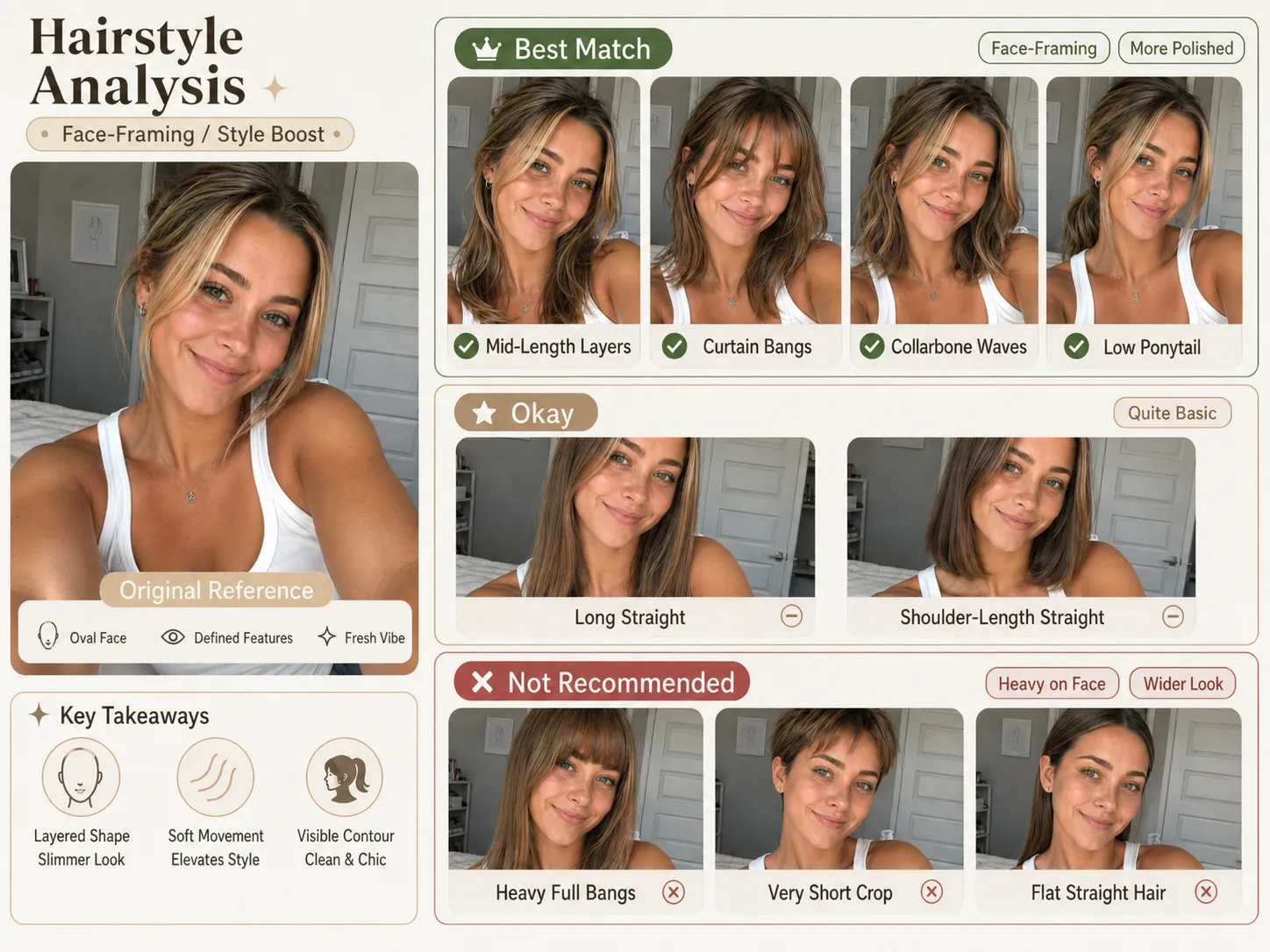
“ChatGPT hairstyle prompt” has quickly become one of the most popular AI style trends. It is not just a simple haircut prompt. It is a new way to use AI: upload a selfie, paste a carefully written prompt, and ask ChatGPT or an AI image tool to analyze your face shape, hair texture, hairline, forehead proportion, haircut length, color direction, and overall style.
This trend is closely connected to the improvement of AI image generation. OpenAI says GPT-4o image generation is strong at following prompts, rendering text, and using uploaded images as visual inspiration. OpenAI’s Help Center also explains that users can upload existing images and edit them in ChatGPT Images. Recent social posts and media tutorials show users creating hairstyle analysis graphics from a portrait, including face shape, hair texture, hair density, hairline, recommended hairstyles, styles to avoid, and side-by-side visual comparisons.
What Is a ChatGPT Hairstyle Prompt?
A ChatGPT hairstyle prompt is a structured AI prompt designed to help you analyze and preview hairstyles based on your own photo.
A good hairstyle prompt usually asks AI to look at:
Face shape: oval, round, square, heart-shaped, long, etc.
Hair texture: straight, wavy, curly, fine, thick, flat, or high-volume
Facial proportions: forehead, cheekbones, jawline, face length, and face width
Current hairstyle: length, layers, volume, parting, bangs, and overall shape
Best hairstyle directions: short hair, medium hair, long hair, layers, bangs, waves, or color
Less ideal choices: styles that may be hard to maintain or less flattering
The biggest difference between a normal hairstyle question and a ChatGPT hairstyle prompt is the output. Instead of only getting a paragraph of advice, you can ask for a visual hairstyle analysis card. That makes it easier to compare different looks on the same face.
Why Is the ChatGPT Hairstyle Prompt So Popular?
The first reason is simple: changing your hair is a high-risk decision. Many people worry about whether bangs will suit them, whether short hair will make their face look wider, whether a certain color will wash them out, or whether a trendy haircut will match their real hair texture.
The second reason is that AI can now turn advice into visual comparison. OpenAI’s image generation guide describes newer image models as useful for production-quality visuals, structured compositions, multi-panel layouts, reliable text rendering, and stronger identity preservation for edits. That makes hairstyle prompts feel less like a chatbot answer and more like a lightweight personal style consultation.
The third reason is shareability. Hairstyle analysis cards often use a clean grid, side-by-side comparison, and short labels such as “Best,” “Good Option,” and “Avoid.” This format works well for TikTok, Instagram, Threads, Pinterest, and other visual platforms. Popular prompt examples also commonly ask for visual-first layouts, side-by-side comparisons, and short labels instead of long explanations.
Copy-and-Paste ChatGPT Hairstyle Prompt
Upload a clear front-facing selfie, then paste this prompt:
Create a high-quality hairstyle analysis graphic based on this portrait.

Keep the person’s real facial features, face shape, skin tone, and overall identity consistent. Analyze the visible face shape, forehead proportion, jawline, cheekbone width, hair texture, hair density, current hair length, and overall style vibe.

Show side-by-side hairstyle comparisons on the same person. Include:
1. Best hairstyle matches
2. Possible but not ideal alternatives
3. Hairstyles to avoid
4. Short, medium, and long hair options
5. Bangs, no bangs, side part, and middle part options
6. Suitable hair color directions if relevant

Design the output as a clean, modern, visual-first hairstyle analysis card. Use short labels only, such as “Best Match,” “Good Option,” and “Avoid.” Do not add long paragraphs. Make the layout easy to understand and suitable for sharing on social media.
For an English-only result, add:
Use English labels only. Keep all text short and clean.For a bilingual result, add:
Use English and Chinese labels. Keep all text short and clean.Best Practices for Better Results
Use a clear selfie. A front-facing portrait with natural lighting works best. Make sure your hairline, forehead, jawline, and face outline are visible. Some hairstyle prompt tutorials also recommend using a clear portrait with natural light and minimal makeup.
Be specific about your goal. Do not only ask, “What hairstyle suits me?” Instead, tell the AI what you want: a more professional look, a younger style, a slimmer face effect, a low-maintenance haircut, a softer appearance, a bolder look, or a cleaner everyday style.
Ask for comparisons, not just advice. For example, compare short vs. medium vs. long hair, bangs vs. no bangs, middle part vs. side part, warm brown vs. cool brown, or layered cut vs. blunt cut.
Use the result as a reference, not a final decision. AI can help you narrow down options, but a real stylist can judge your hair density, growth direction, head shape, and styling habits more accurately in person.
A Simpler Option: Try Hairstyle Analysis
If you do not want to write and adjust prompts every time, you can use HairstyleAnalysis.com instead. It is built specifically for AI hairstyle analysis. You upload a clear selfie, and the tool generates a visual hairstyle analysis board with face shape context, hair type insights, flattering haircut directions, less ideal styles, and a shareable 4:3 result. The site also states that first sign-in includes one free analysis.
Compared with a general ChatGPT prompt, a dedicated hairstyle analyzer gives you a more direct workflow. You do not need to explain the format from scratch. You simply upload your photo, generate the analysis, compare the recommended and less ideal styles, and save the result before your next salon or barber visit.
Who Should Use a ChatGPT Hairstyle Prompt?
A ChatGPT hairstyle prompt is especially useful if you:
Want to change your haircut but do not know where to start
Are unsure whether bangs suit your face
Want to compare short, medium, and long hairstyles
Need haircut ideas for your face shape and hair texture
Want to test hair color directions before dyeing
Need a clearer reference before visiting a stylist
Want to create a shareable personal hairstyle analysis card
Limitations of AI Hairstyle Analysis
AI hairstyle analysis is helpful, but it is not perfect.
First, it can only analyze what is visible in the photo. Lighting, filters, camera angle, makeup, and hair covering the face can affect the result.
Second, AI may not fully understand your real hair behavior from one selfie. Hair growth direction, natural curls, scalp volume, cowlicks, and styling difficulty are easier to judge in person.
Third, an AI-generated hairstyle preview may look good but still require daily styling in real life. The best approach is to use AI as a planning and communication tool, not as an absolute rule.
Final Thoughts
The rise of the ChatGPT hairstyle prompt shows a real user need: people want more than generic hairstyle advice. They want personalized, visual references based on their own face, hair, and style goals.
You can start with the copy-and-paste prompt above if you enjoy experimenting with ChatGPT. But if you want a faster and more focused experience, try HairstyleAnalysis.com. It turns one selfie into a clear AI hairstyle analysis board that you can save, compare, and bring to your next haircut appointment.